Last Updated on: 15th June 2025, 08:21 am
Paris is divided into 20 administrative districts called arrondissements, numbered 1 through 20.
These districts spiral outward from the city center in a clockwise pattern, creating what Parisians call the “snail shell” (escargot) formation.
Each arrondissement has its own distinct character, history, and attractions.
This guide will help you plan your visit to Paris and organize your itineraries efficiently.
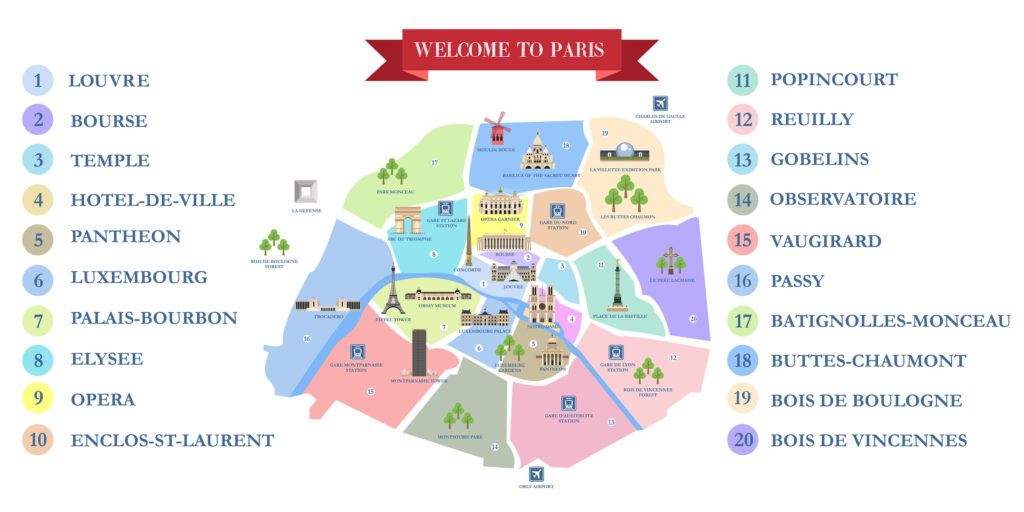
The Spiral Pattern
Contents
- 1 The Spiral Pattern
- 2 Central Arrondissements (1st-4th)
- 3 Left Bank Central (5th-7th)
- 4 Right Bank – Prestigious (8th-9th, 16th)
- 5 Right Bank – Eastern Districts (10th-12th)
- 6 Left Bank – Southern Districts (13th-15th)
- 7 Right Bank – Northern Heights (17th-20th)
- 8 Administrative Structure
- 9 Cultural Significance
The arrondissements are arranged in a spiral starting from the center of Paris at the Louvre. The 1st arrondissement sits at the heart of the city, with subsequent districts spiraling outward clockwise. This numbering system was established in 1860 during Baron Haussmann’s renovation of Paris under Napoleon III.
This is one of the smartest administrative structures I’ve seen. It makes it very easy to expand the city by adding new arrondissements without having to re-organize the already existing ones.
Just take a look at the ancient Paris maps in the Carnavalet Museum to see how small the city was in the Medieval times.
Central Arrondissements (1st-4th)
1st Arrondissement (Louvre)
The historic and tourist heart of Paris, home to the Louvre Museum, Tuileries Garden, and Place Vendôme. This district combines royal history with luxury shopping and remains one of the most prestigious addresses in the city.
Notable hotels:
Grand Hotel Du Palais Royal: 5-star hotel, near the Louvre and Tuileries Gardens, with direct access via Metro to Champs-Elysees, Arc de Triomphe and Place de la Concorde. The room with rooftop terrace offers direct view to the Eiffel tower.
Le Meurice: 5-star hotel, featuring the famous Dali Restaurant and a fitness and spa center under the reputable Swiss brand Valmont. Jardins des Tuileries are just across the street. Should you intend to book it for your Paris stay, keep in mind that the spa center doesn’t have a pool. Also, the terrace boasting those wonderful views of Paris belongs to a private suite and it can’t be accessed unless you book that very room.
Hôtel Louvre Richelieu: 3-star hotel with good reviews on Booking. It is very close to Galerie Vivienne, one of the most beautiful covered passages in Paris.
I haven’t stayed in any of the hotels above, as my favorite neighborhood to stay in Paris is Place de Clichy. Nevertheless, I’ve picked them by carefully reading customer reviews and by assessing their pros and cons.
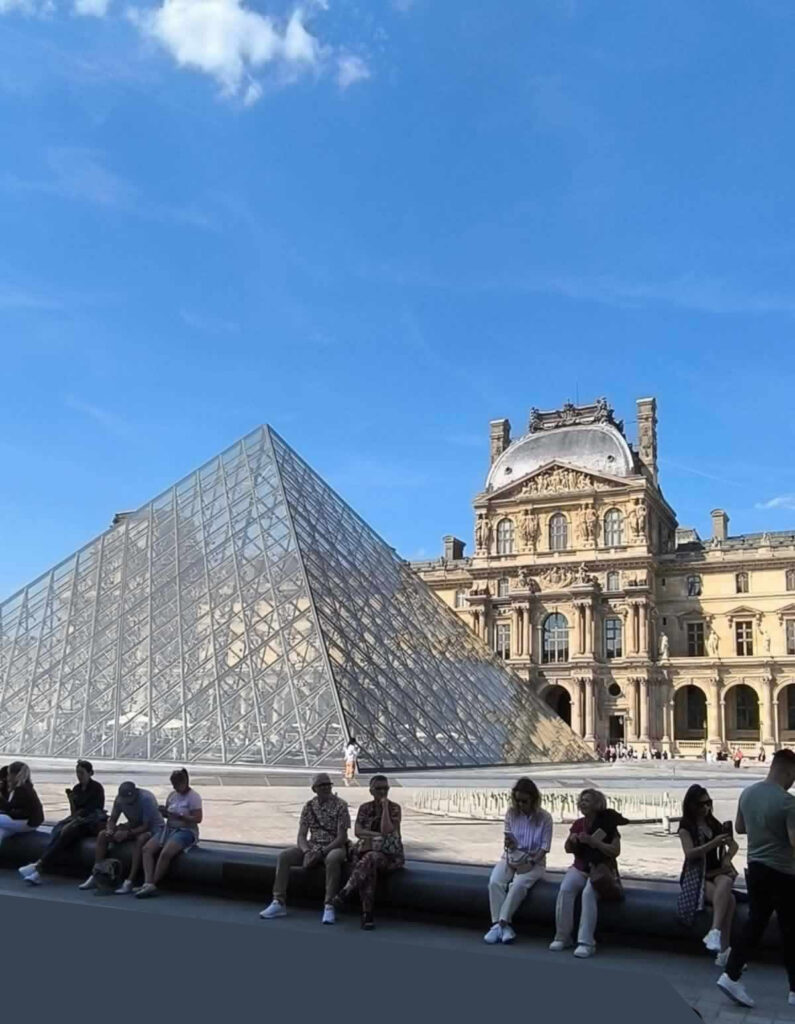
Louvre, probably the most-known museum in Paris, is located in the 1st arrondissement. It is considered the central point of the city.
2nd Arrondissement (La Bourse)
A compact district known for its covered passages (galleries), the former stock exchange (La Bourse), and a mix of business and residential areas. It’s home to many of Paris’s famous glass-roofed shopping arcades.
Notable hotels
Hôtel Filigrane & Spa: Located near Passage Verdeau, this hotel can be a great choice for those seeking to explore this area of Paris. The rooms are small, but most places in the city are like that. The fact that everything is new, modern and elegant is worth taking into consideration when making your choice of a hotel.
Lyric Hotel Paris Opera: This four-star design hotel features a hammam, a sauna, and a swimming pool, as well as a fitness room. It is very close to the 4 Septembre Metro Station.
Hotel Malte – Astotel: located near Pyramides Metro Station, this 4-star boutique hotel has direct access to Saint-Lazare Train Station. The Opéra Garnier is a 10-minute walk away. According to other travelers, the staff is very nice, the hotel is very clean, and the breakfast is good.
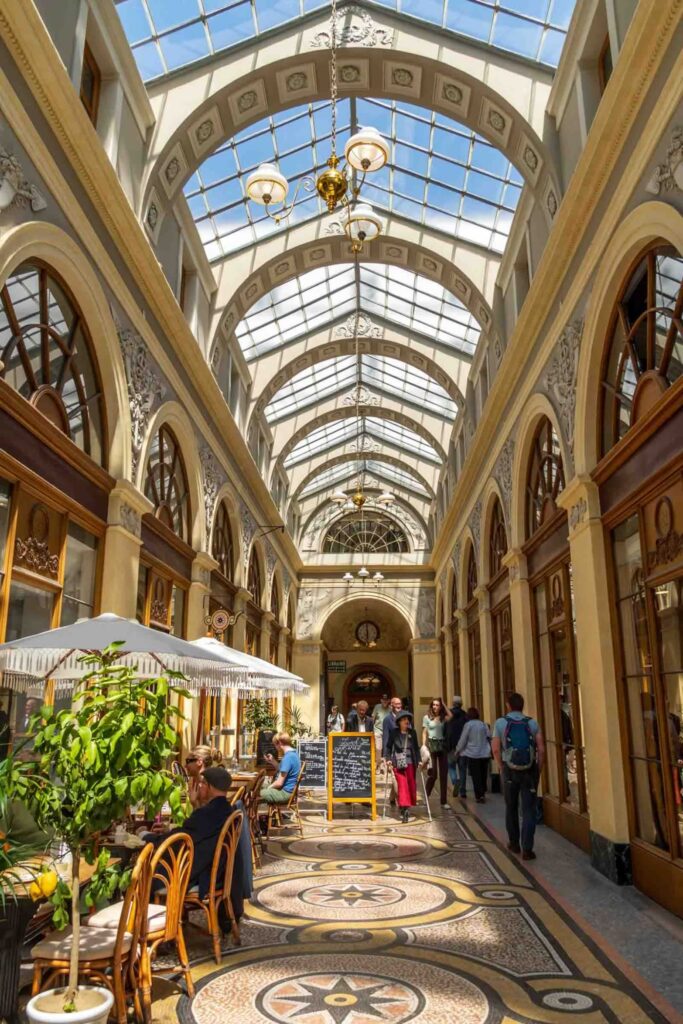
Passage Vivienne, one of the most beautiful covered passages
3rd Arrondissement (Temple)
The 3rd arrondissement includes part of the Marais district, featuring medieval streets, trendy boutiques, and the Place des Vosges area. It’s known for its mix of Jewish heritage and contemporary arts scene.
It also includes Musee Carnavalet, the museum that showcases the history of Paris, as well as The National Museum Picasso Paris..
Notable hotels
Hotel Les Bains Paris: stylish and laid back, this hotel features a wet sauna and a small pool. It is located near the Marais neighborhood.
Hotel National Des Arts et Metiers: 4-star hotel with a beautiful view of a church and plaza, located near the Pompidou Center and not far from Louvre and Opera Garnier.
Boudoir des Muses: 4-star hotel with 24h concierge, and many of the key attractions nearby.
4th Arrondissement (Hôtel-de-Ville)
Contains the other half of the Marais, Notre-Dame Cathedral, Île Saint-Louis, and the Jewish quarter around Rue des Rosiers. This area perfectly balances medieval architecture with modern Parisian life.
Notable hotels
Hotel Dupond-Smith: chic and clean 5-star hotel featuring individually-decorated rooms and a 24-hour front desk
Hôtel Saint-Louis en l’Isle: 3-star hotel near Notre Dame de Paris and the Latin Quarter, surrounded by lots of cafes and restaurants
Hôtel Caron de Beaumarchais
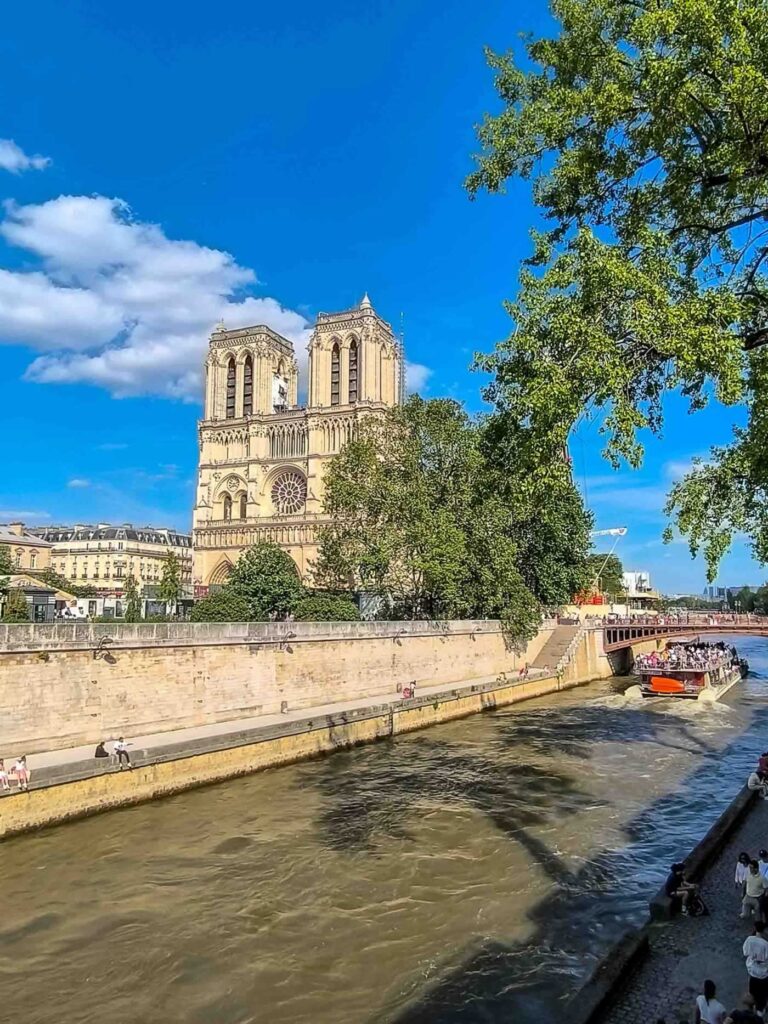
Notre Dame de Paris & La Seine
Left Bank Central (5th-7th)
5th Arrondissement (Panthéon)
The Latin Quarter, home to the Sorbonne, Panthéon, and student life. This intellectual heart of Paris combines ancient Roman ruins with vibrant university culture.
Notable hotels
La Villa Panthéon,
Hôtel des Grands Hommes,
Select Hotel
6th Arrondissement (Luxembourg)
Saint-Germain-des-Prés area, famous for its cafés, intellectual history, and the Luxembourg Gardens. It represents the sophisticated, literary side of Parisian culture.
Notable hotels:
Hôtel Lutetia,
L’Hôtel,
Relais Christine
7th Arrondissement (Palais-Bourbon)
The 7th arrondissement contains the Eiffel Tower, Invalides, and many government buildings. This prestigious district combines tourist attractions with political power centers.
Notable hotels:
Shangri-La Hotel Paris,
Hôtel des Invalides,
Le Narcisse Blanc
Right Bank – Prestigious (8th-9th, 16th)
8th Arrondissement (Élysée)
The center of Parisian elegance, featuring the Champs-Élysées, Arc de Triomphe, Place de la Concorde, and the Élysée Palace. This district represents luxury shopping and grand boulevards.
Notable hotels: Four Seasons Hotel George V, Le Bristol Paris, Hôtel Plaza Athénée
9th Arrondissement (Opéra Garnier)
Home to the Opéra Garnier, department stores like Galeries Lafayette and Printemps, and the lively Pigalle district. It’s a mix of high culture and nightlife.
Notable hotels: InterContinental Paris Le Grand, Scribe Paris Opera, Hotel Malte Opera Astotel
16th Arrondissement (Passy)
One of the wealthiest districts, featuring upscale residential areas, the Trocadéro, and several museums. It’s known for its conservative, wealthy character.
Notable hotels: Shangri-La Hotel Paris, Peninsula Paris, Saint James Paris
Right Bank – Eastern Districts (10th-12th)
10th Arrondissement (Enclos Saint-Laurent)
A diverse, working-class district with two major train stations (Gare du Nord and Gare de l’Est). It’s known for its multicultural atmosphere and the scenic Canal Saint-Martin.
Notable hotels: Hôtel Providences, Le Citizen Hotel, Generator Paris
11th Arrondissement (Popincourt)
The heart of Parisian nightlife, centered around Bastille and République. This former working-class area has become trendy while maintaining its rebellious spirit.
Notable hotels: Hôtel Gabriel Paris, Fabric Hotel, Hôtel des Metallos
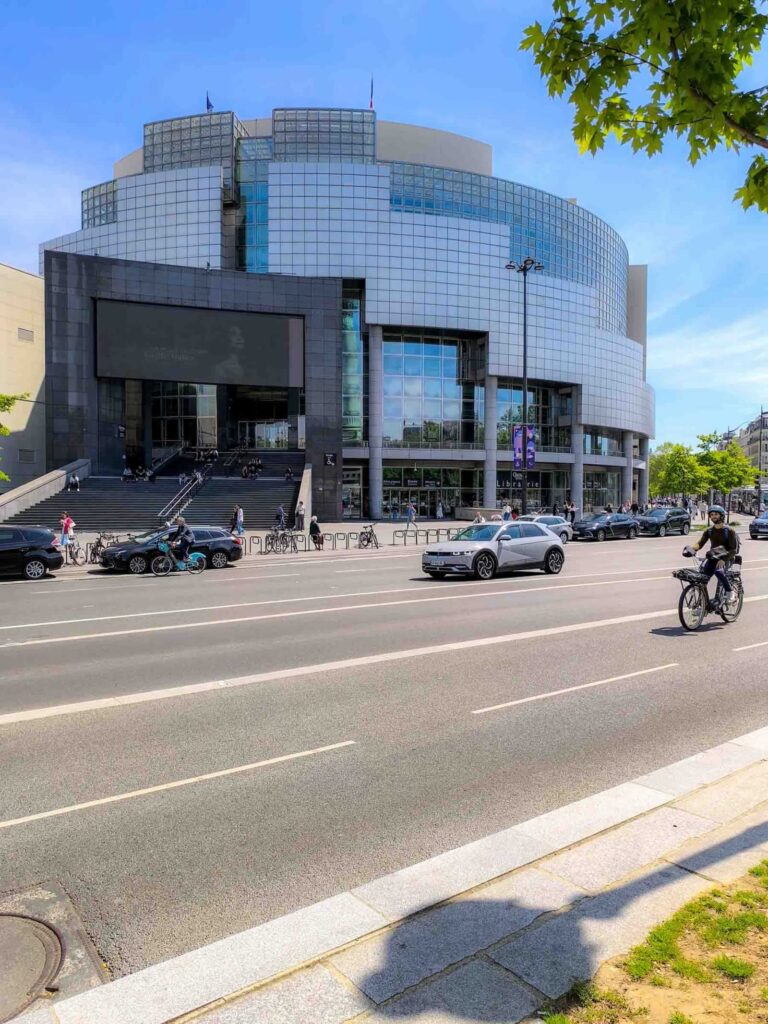
Opera Bastille
12th Arrondissement (Reuilly)
Features the Bastille Opera, Bois de Vincennes park, and the elevated Promenade Plantée (predecessor to New York’s High Line). It’s a mix of modern architecture and green spaces.
Notable hotels: Hôtel Lyon Bastille, Hôtel Jeanne d’Arc Le Marais, Ibis Styles Paris Bercy
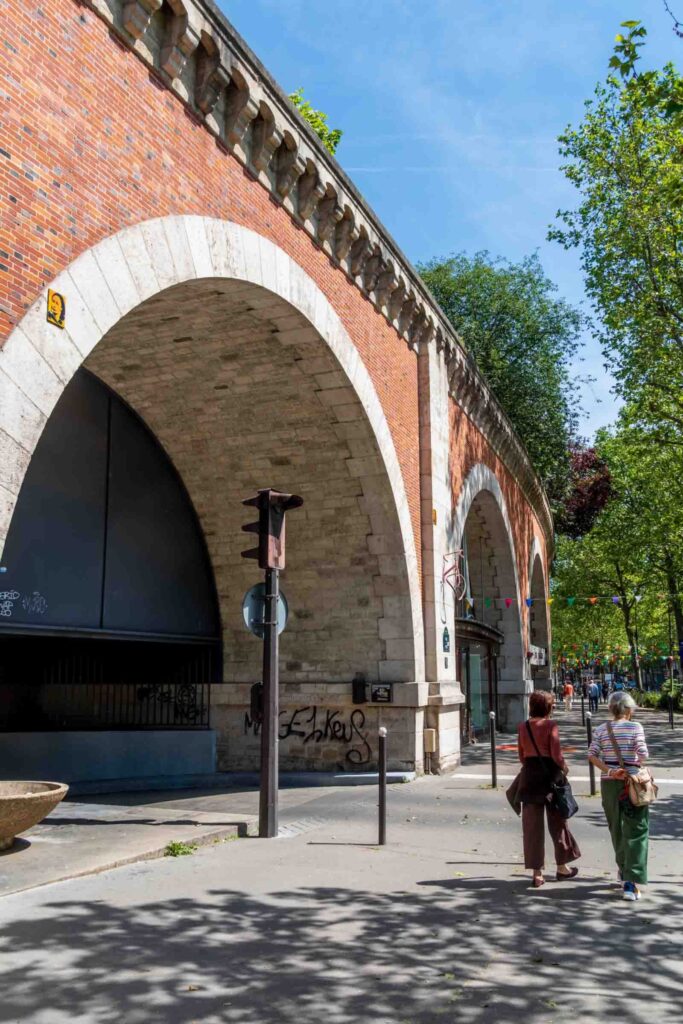
The Promenade Plantee sits on top of this ancient viaduct
Left Bank – Southern Districts (13th-15th)
13th Arrondissement (Gobelins)
Features Paris’s Chinatown, the National Library, and modern high-rise developments. It’s one of the most diverse and rapidly changing districts.
Notable hotels: Pullman Paris Centre-Bercy, Mercure Paris Gobelins Place d’Italie, Ibis Styles Paris Tolbiac Bibliotheque
14th Arrondissement (Observatoire)
Home to Montparnasse Tower, numerous crêperies, and the Catacombs. It has strong Breton cultural influences and a more relaxed, residential atmosphere.
Notable hotels: Pullman Paris Montparnasse, Mercure Paris Montparnasse, Hotel Lenox Montparnasse
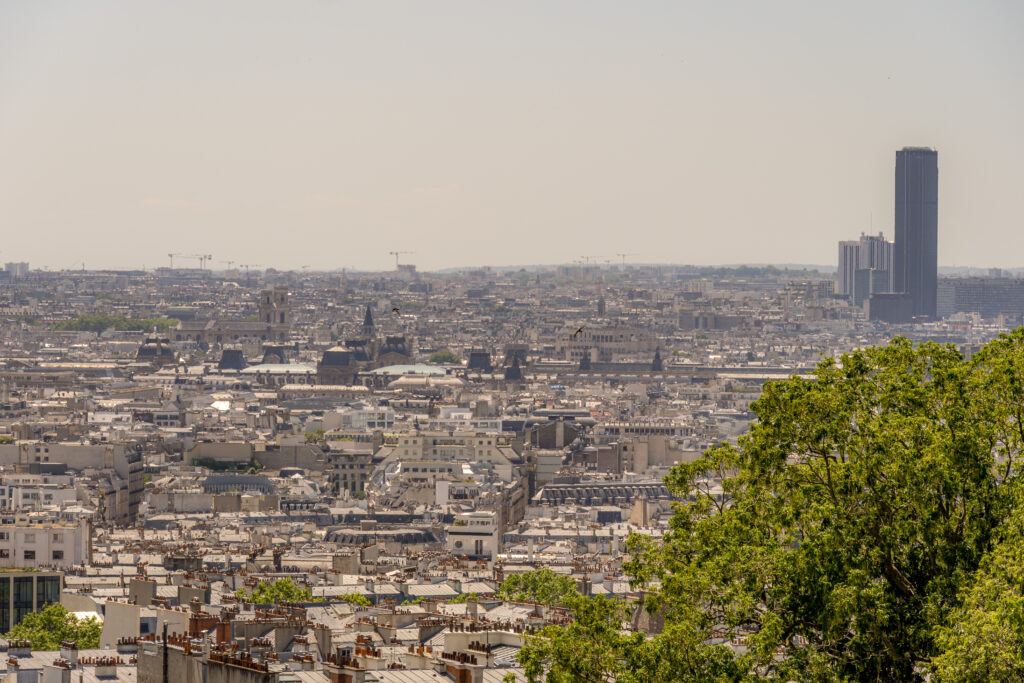
Montparnasse Tower – view from Butte Montmartre
15th Arrondissement (Vaugirard)
The largest and most populous arrondissement, primarily residential with the Parc André Citroën. It represents typical middle-class Parisian family life.
Notable hotels: Novotel Paris Centre Tour Eiffel, Pullman Paris Tour Eiffel, Hotel Beaugrenelle Tour Eiffel
Right Bank – Northern Heights (17th-20th)
17th Arrondissement (Batignolles-Monceau)
Split between the elegant Monceau area near Parc Monceau and the more bohemian Batignolles district. It represents both wealthy comfort and artistic creativity.
Notable hotels: Hotel Regent’s Garden, Hotel Splendid Etoile, Best Western Premier Opera Faubourg
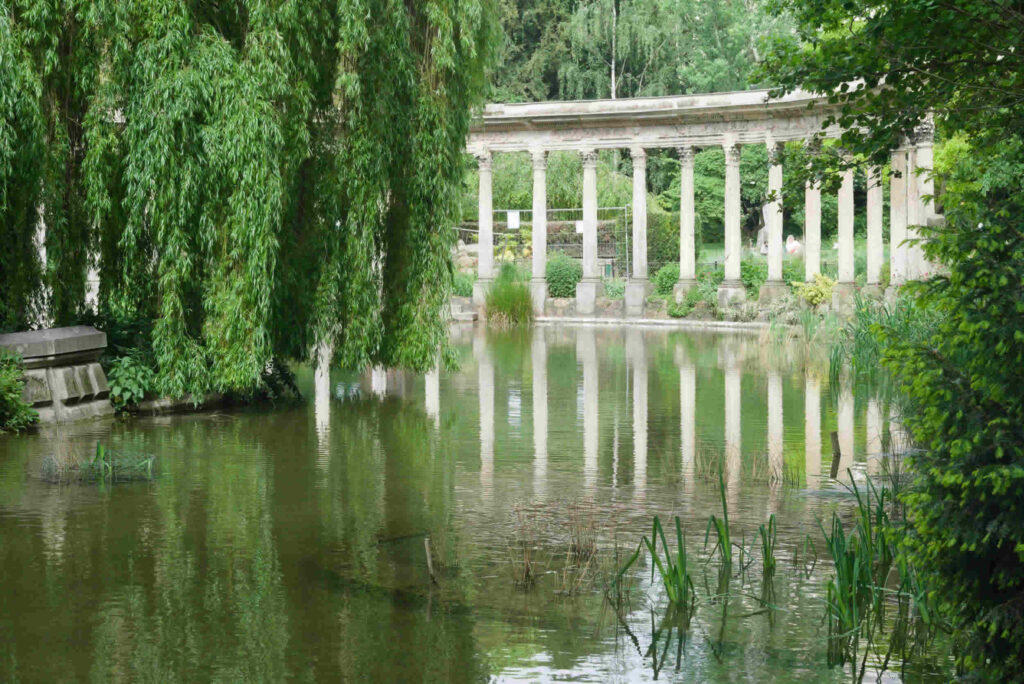
Parc Monceau
18th Arrondissement (Butte-Montmartre)
Famous for Montmartre hill, Sacré-Cœur Basilica, and the artistic heritage of Place du Tertre. Despite gentrification, it maintains its village-like atmosphere and artistic soul.
Here you’ll find the famous I Love You Wall, also known as Le Mur des Je t’aimes or Le Mur de l’amour.
Notable hotels: Terrass” Hotel, Le Consulat, Hotel des Arts Montmartre
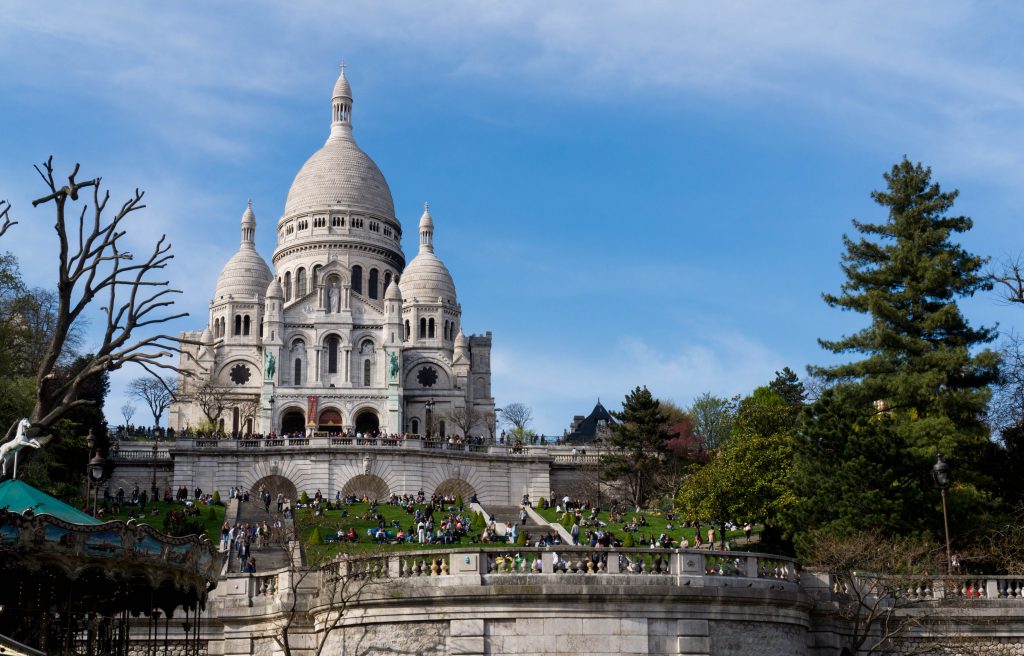
Sacre Coeur – Montmartre
19th Arrondissement (Buttes-Chaumont)
A diverse, multicultural district featuring the beautiful Parc des Buttes-Chaumont and the modern La Villette complex with its science museum and concert halls.
Notable hotels: Holiday Inn Paris Canal de la Villette, Hotel Scarlett, ibis Paris Canal Saint Martin
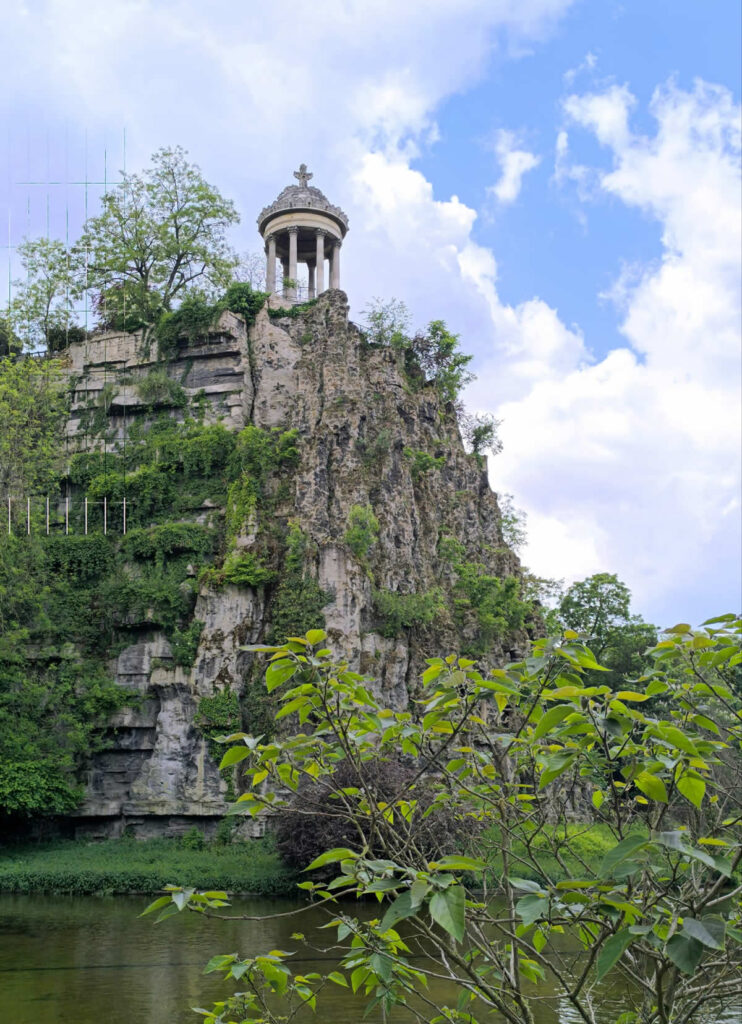
Parc des Buttes Chaumont
20th Arrondissement (Ménilmontant)
Known for Père Lachaise Cemetery and its multicultural, working-class character. It’s increasingly popular with young Parisians and artists seeking affordable neighborhoods.
Notable hotels: Mama Shelter Paris East, Hotel Palma, Hotel Eden Montmartre
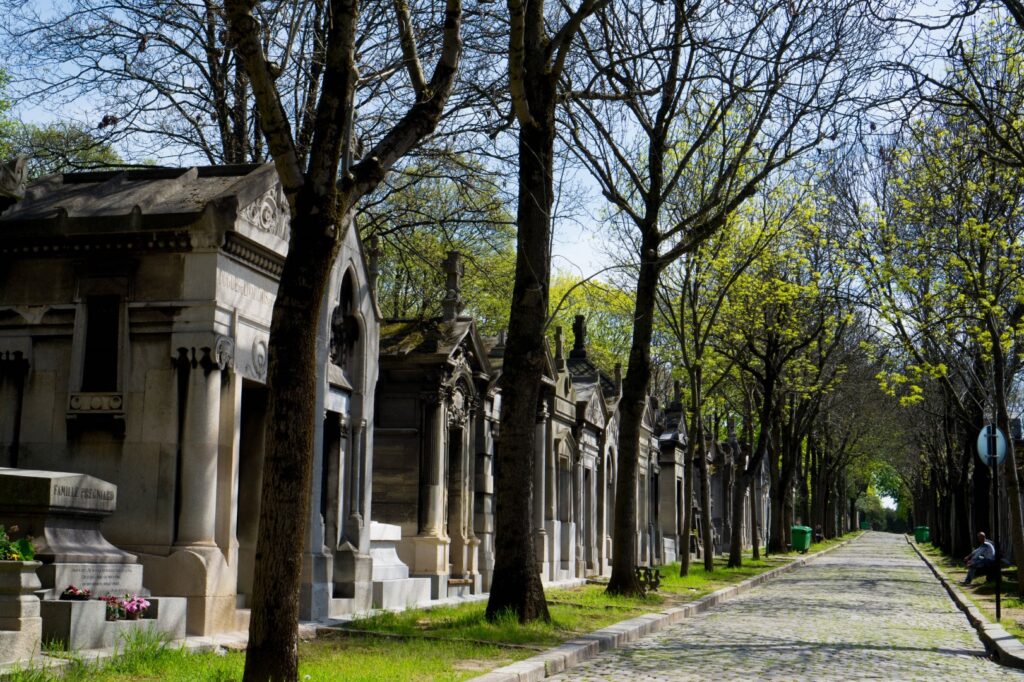
One of the beautiful alleyways in Pere Lachaise
Administrative Structure
Each arrondissement has its own mayor and town hall (mairie), while being part of the larger Paris municipality. They maintain local services like civil registries, social services, and community programs. The arrondissement system helps maintain neighborhood identity while ensuring efficient city-wide governance.
The postal codes follow the pattern 750XX, where XX represents the arrondissement number (75001 for the 1st, 75020 for the 20th).
Cultural Significance
Beyond administrative convenience, the arrondissements represent distinct Parisian identities.
Parisians often identify strongly with their arrondissement, and each has developed its own personality over centuries. From the tourist-focused 1st to the multicultural 20th, these districts showcase the full spectrum of Parisian life, making the city a collection of interconnected villages rather than a monolithic urban center.