Last Updated on: 30th June 2025, 09:26 am
Paris has one of the world’s most comprehensive and efficient public transportation systems. This makes it easy for tourists to navigate the City of Light.
From the extensive underground network of the Parisian Metro to modern bike-sharing apps, visitors have numerous options to explore every corner of the capital and its surroundings.
Even if you’re visiting Paris with your date, you’ll still want to use the public transport, as it is way more cost-effective than taxis. Many times it is also the fastest way to commute between the various attractions in and around Paris.
This article takes a closer look into the different public transport options and the areas they cover. It also includes a brief overview on buying tickets and passes, with focus on tourist commuting options.
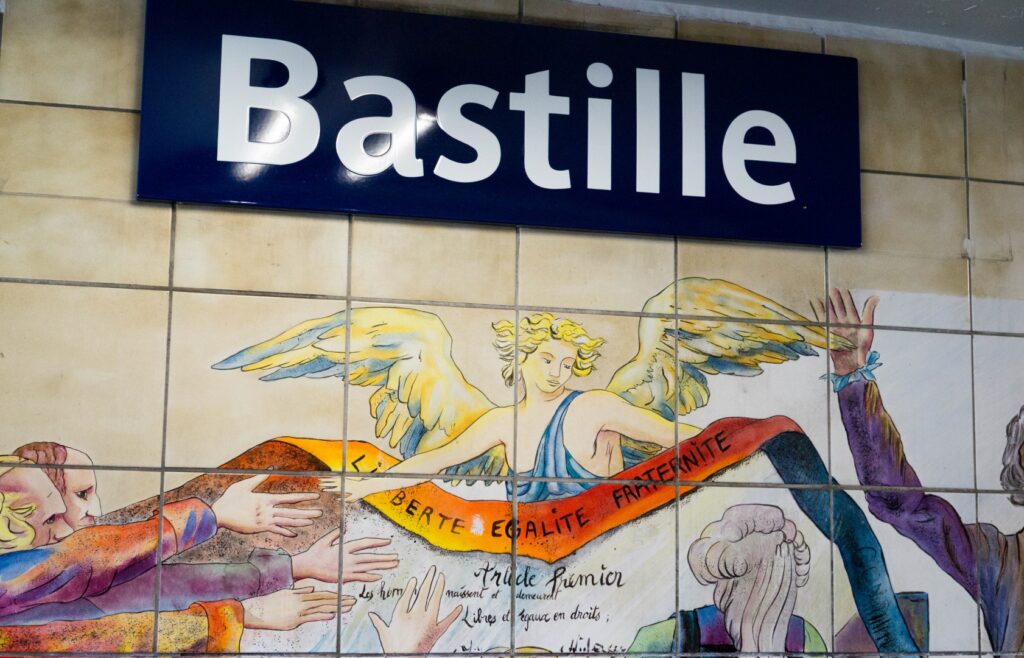
Metro Bastille mural
Paris Metro
Contents
The Paris Metro is the backbone of the city’s public transport network, with 14 lines covering 214 stations across the city.
It is the fastest way to get around in Paris.
The downside is that you don’t get to see the city, since the commuting occurs underground for the most part of it. The other downside is that oftentimes changing the line requires long walks inside rather narrow tunnels.
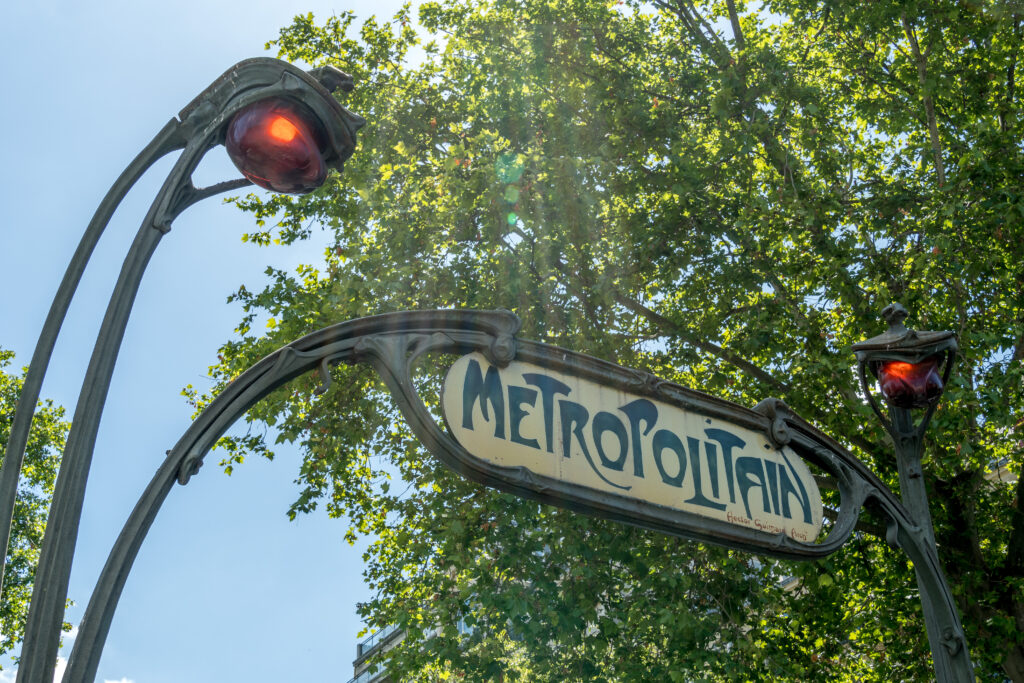
Operating since 1900, this underground railway system is instantly recognizable by its distinctive Art Nouveau entrance signs designed by Hector Guimard.
Operating Hours
The Metro runs from approximately 5:30 AM to 1:15 AM (2:15 AM on Fridays and Saturdays), with trains arriving every 2-7 minutes during peak hours.
Lines are numbered 1-14 and color-coded on maps, making navigation straightforward.
Each line connects major tourist attractions, with famous stops including Châtelet-Les Halles, Opéra, and Champs-Élysées-Clemenceau.
Tourist tip: Install the Bonjour RATP app to buy tickets and passes, and to use the enclosed maps and navigation directions.
The Metro is generally safe, but keep an eye on your belongings, especially during rush hours.
In fact, it’s best to avoid rush hours, if possible, as getting on a train can be a real challenge. Sometimes, the decks are chocked full of people, so you may need to wait for the second or even for the third train to be able to get inside.
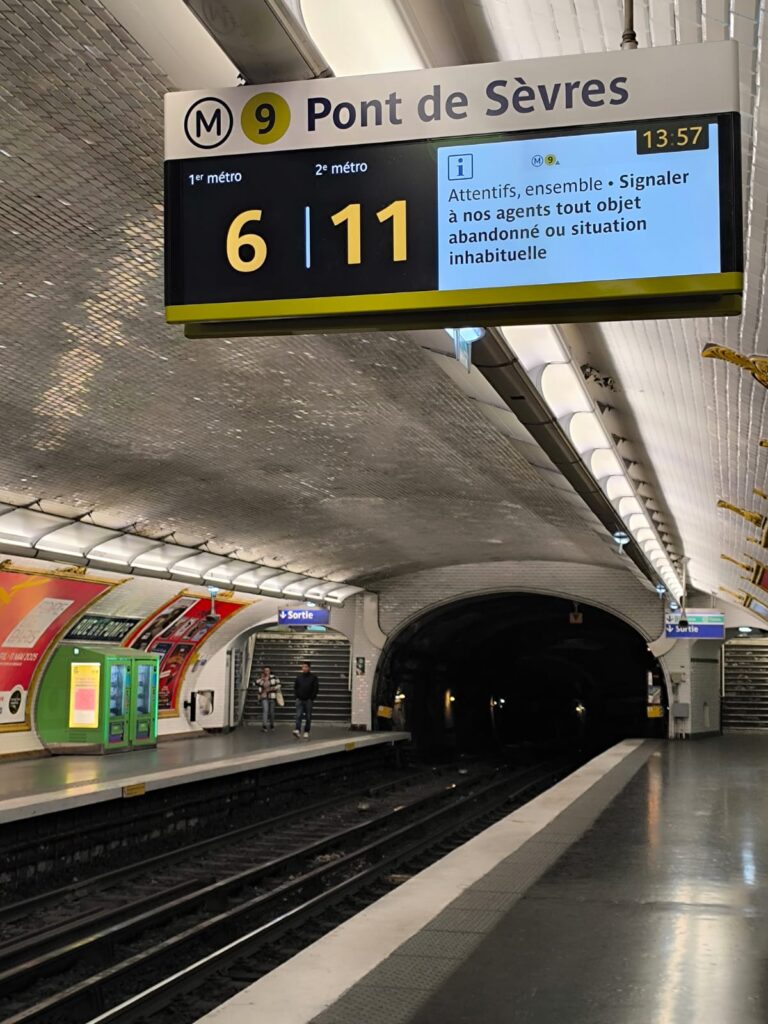
Paris Metro signs and maps are clear and easy to understand
RER
The Réseau Express Régional (RER) is Paris’s regional express railway system, consisting of five lines (A, B, C, D, and E) that extend far beyond the city limits.
These trains are essential for reaching major attractions outside central Paris, including Versailles (RER C), Charles de Gaulle Airport (RER B), and Disneyland Paris (RER A).
RER trains are larger and faster than Metro trains, making fewer stops within the city center. They operate from approximately 5:00 AM to 1:20 AM, with extended hours on weekends.
The RER network intersects with Metro lines at several key stations, allowing for seamless transfers between systems.
Since 2025, all RER travel within the Île-de-France region uses the same unified ticketing system as the Metro, eliminating the need for separate zone-based tickets. The RER is particularly valuable for day trips and airport connections.
Bus
Paris operates an extensive bus network with over 350 lines serving the city and surrounding areas.
Buses complement the Metro system by providing surface-level transportation, offering passengers scenic views of the city’s architecture and streets.
Regular bus lines operate from 7:00 AM to 8:30 PM, while Noctilien night buses run until 5:30 AM on weekends. Many buses are now electric or hybrid, contributing to the city’s environmental goals.
Bus stops display real-time arrival information, and most buses are wheelchair accessible. Furthermore, the different bus lines use different background colors to display the numbers, thus helping travelers recognize their bus from a distance.
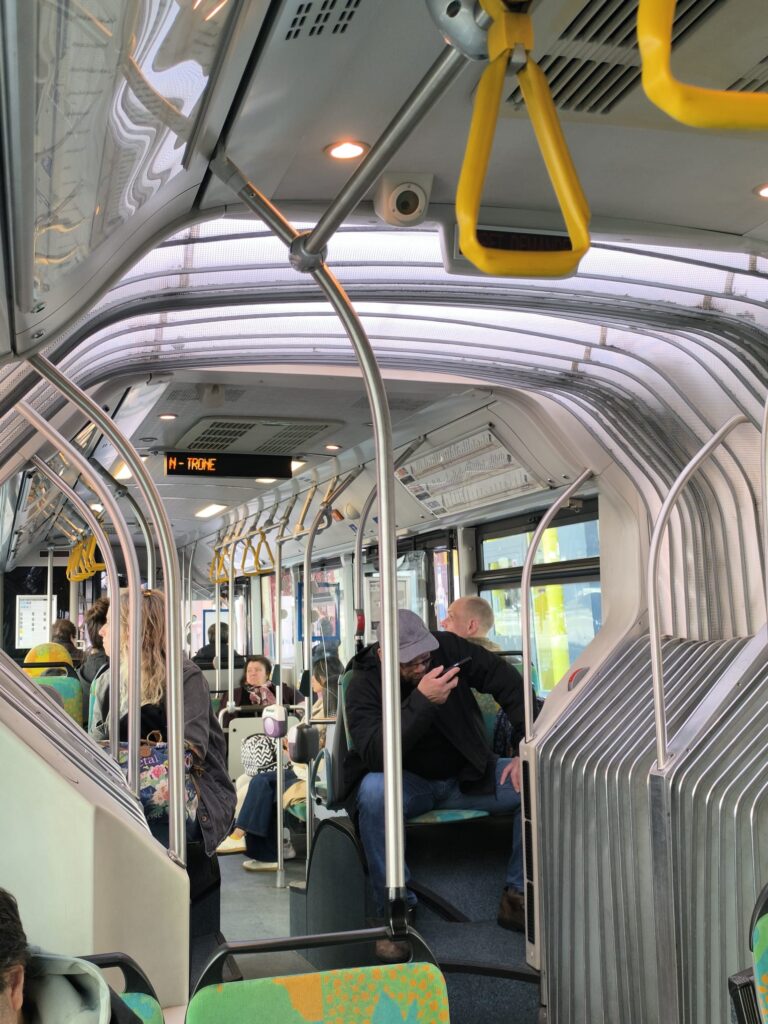
Paris buses are clean and comfortable.
The bus system is particularly useful for reaching areas not well-served by Metro lines and for enjoying above-ground sightseeing while traveling. Line 69, for example, passes many major landmarks including the Louvre, Invalides, and Eiffel Tower.
Tram
Paris operates an expanding tram network that serves both the city center and suburban areas, offering a modern and comfortable alternative to buses and Metro lines.
The current network consists of nine tram lines (T1, T2, T3a, T3b, T4, T5, T6, T7, T8, and T9) that primarily serve the outer arrondissements and surrounding communes.
The most tourist-relevant lines include Tram T3a and T3b, which form a semi-circular route around southern Paris, connecting attractions like the Cité de la Mode et du Design and Bibliothèque François Mitterrand.
Tram T1 runs from Saint-Denis to Noisy-le-Sec, useful for accessing the Stade de France and northern suburban attractions.
Trams operate from approximately 5:30 AM to 1:15 AM (2:15 AM on weekends), running every 4-8 minutes during peak hours. These modern, low-floor vehicles are fully wheelchair accessible and offer air conditioning, making them comfortable in all weather conditions. The large windows provide excellent views of the city’s diverse neighborhoods and architecture.
Tram tickets are the same as those used for buses. They cost 2 Euro.
Cable Car
The “Funiculaire de Montmartre” is the most tourist-relevant cable car, connecting the Pigalle area to the summit of Butte Montmartre and the famous Sacré-Cœur Basilica.
This historic funicular, operating since 1900, climbs the steep 108-meter ascent that would otherwise require a challenging uphill walk. The journey takes just 90 seconds but saves visitors considerable effort while providing glimpses of Montmartre’s charming streets.
The funicular operates daily from 6:00 AM to 12:45 AM (1:45 AM on Fridays and Saturdays) and runs every few minutes. It’s accessible with standard Metro tickets and passes. The lower station is near Pigalle Metro station, while the upper station deposits passengers just steps from Sacré-Cœur and Place du Tertre.
Taxi
Traditional taxis remain an important part of Paris’s transport ecosystem, easily identifiable by their “TAXI” roof signs that illuminate when available. Official taxis use meters and follow regulated pricing structures, with higher rates during evenings, weekends, and for airport trips.
Taxi stands are located throughout the city, particularly near major attractions, train stations, and hotels. You can also hail taxis on the street when their light is on. Modern alternatives include ride-sharing services like Uber, which operate alongside traditional taxis and often provide upfront pricing.
For airport transfers or late-night travel when public transport is limited, taxis offer convenience and door-to-door service. However, they’re significantly more expensive than public transport and can be affected by traffic congestion.
Vélo (Vélib’)
Vélib’ is Paris’s public bicycle sharing system, featuring thousands of bikes available at stations throughout the city. This eco-friendly option allows tourists to explore Paris at their own pace while getting exercise and fresh air.
The system offers both mechanical and electric bikes, with electric versions providing assistance for hills and longer distances.
Bikes can be rented for short trips (under 30 minutes are often free with passes) or longer periods. The extensive network of dedicated bike lanes makes cycling increasingly safe and pleasant.
Vélib’ is perfect for covering medium distances, accessing areas between Metro stations, and enjoying leisurely exploration of parks and riverside paths. The system integrates with smartphone apps for easy bike location and rental.
I haven’t used these bikes, but I’ve noticed the bicycle lanes are generous all over Paris.
River Transport (Batobus and Water Taxis)
The Seine River offers a unique and scenic way to travel through central Paris, combining transportation with sightseeing. River transport provides a refreshing alternative to underground travel while connecting major tourist attractions along the waterfront.
Batobus is Paris’s hop-on, hop-off river shuttle service, operating year-round with regular stops at nine key locations: Eiffel Tower, Champs-Élysées, Louvre, Saint-Germain-des-Prés, Notre-Dame, Jardin des Plantes, Hôtel de Ville, Musée d’Orsay, and Beaugrenelle. These glass-topped boats run approximately every 20-30 minutes during peak season (March to October) and every 45 minutes during winter months.
Batobus operates from 10:00 AM to 7:00 PM (extended to 9:30 PM in summer), making it ideal for daytime sightseeing.
The service offers 1-day, 2-day, and annual passes, with discounts available for children, students, and seniors. Unlike regular public transport tickets, Batobus requires separate ticketing, but the panoramic views of Notre-Dame, the Louvre, and other riverside landmarks make it worthwhile for many tourists.
Seine Water Taxis and private shuttle services also operate during tourist season, offering more flexible point-to-point transport along the river. These services typically require advance booking and cost more than Batobus but provide personalized experiences and can access smaller docks.

Here’s a glass boat full of passengers
River transport is particularly valuable during pleasant weather, offering photo opportunities and a relaxed pace that contrasts with the efficiency-focused Metro system. The boats are wheelchair accessible and provide audio commentary in multiple languages.
Tickets and Passes
Understanding Paris’s ticketing system helps you save money by choosing the most effective plan for your commuting needs. The city offers various options suited to different travel styles and duration of stay.
Single Tickets
There are no single tickets as such. When you purchase tickets, they get loaded onto a Navigo Easy card.
The Navigo Easy is a reloadable plastic card that costs 2 Euro.
Once you buy it, you can load it with tickets, as well as with transport passes.
If you have the mobile app installed, you can load your tickets directly onto your smartphone instead of a Navigo Easy card.
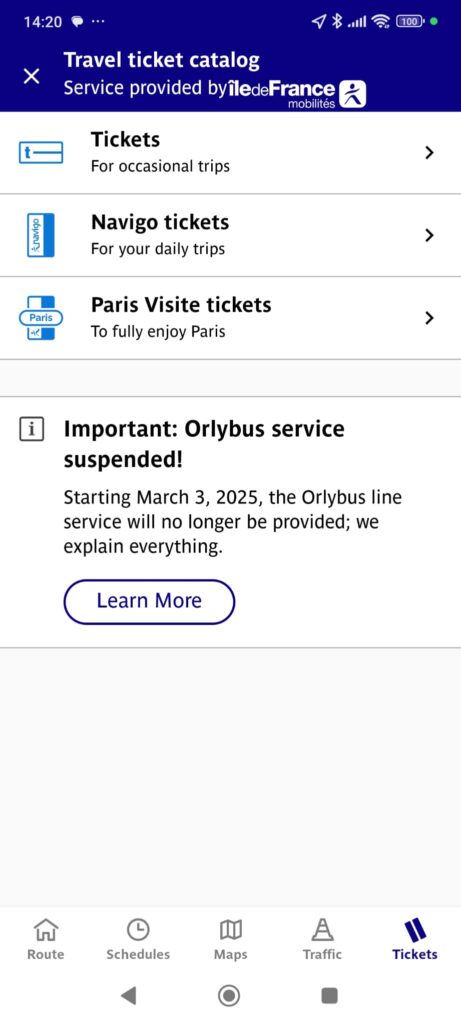
This is the list of all Paris tickets and passes in the Bonjour RATP app on my Android phone (there’s also an iOS variant available)
Metro/Bus Ticket (t+): Valid for one journey on Metro, RER, bus, or tram throughout the greater Paris region. Transfers between Metro lines are free within 1.5 hours, and you can transfer once between bus/tram lines. The Metro fare is 2.5 Euro, the bus and tram fare is 2 Euro (I last checked in May 2025)
Airport: The one-way fare to or from Charles de Gaulle airport is 13 Euro. If you don’t have your Navigo Easy card, you’ll need to buy it. The 13 Euro fare allows you to go wherever you need in Paris without having to buy any other ticket. It is valid for two hours, which is enough to get anywhere you need.
There are also direct bus lines from the airport to various places in Paris. You’ll have to check out the bus station to find your line and to buy your tickets. Fares depend on where you go.
At the RER station at the Charles de Gaulle airport there’s a lady helping people to buy tickets and passes.
If you come to Paris by Beauvais, you’ll need to take the shuttle bus to Saint Denis Universite, La Defnse, La Villette, or Disneyland. The one-way fare is 16.90 Euro. The return ticket costs 29.90 Euro.
Daily and Weekly Passes
Navigo Easy: A reloadable card that can hold individual tickets or day passes. Convenient for tourists staying several days. It costs 2 Euro. If you don’t want to get one, download the Bonjour RATP app on your smartphone, and then load your tickets and your passes directly in the app. You’ll use your phone to pay for your rides.
Navigo Day Pass: Unlimited travel on all public transport within the greater Paris region for one day, including access to Versailles and Disneyland Paris via RER. It does not include the transport to and from the airport.
Navigo Weekly Pass: Offers unlimited travel for a full week (Monday to Sunday). It includes the transport to and from the airport (except from direct bus lines).
Navigo Monthly Pass: Offers unlimited travel for a full month (starting from the 1st). It includes the transport to and from the airport (except from direct bus lines).
Very important: Both the Navigo Weekly and the Navigo Monthly are nominal. This means you can’t pass then to anyone else.
You’ll need a special Navigo Decouverte card with photo and signature. Just find a metro station with photo booths or bring some photos from home.
Loading these passes onto your mobile phone is also possible, but you need to ensure you fill in all of your personal details, including your profile photo in the IDF Mobilites app, in order to avoid a fine.
Tourist-Specific Passes
Paris Museum Pass: While primarily for museum entry, this pass includes some transport benefits and can be combined with transport passes.
Paris Visite Pass: Specifically designed for tourists, these passes are more expensive than the aones. However, they can start on any day you wish, not only on Mondays and on the 1st of the month.
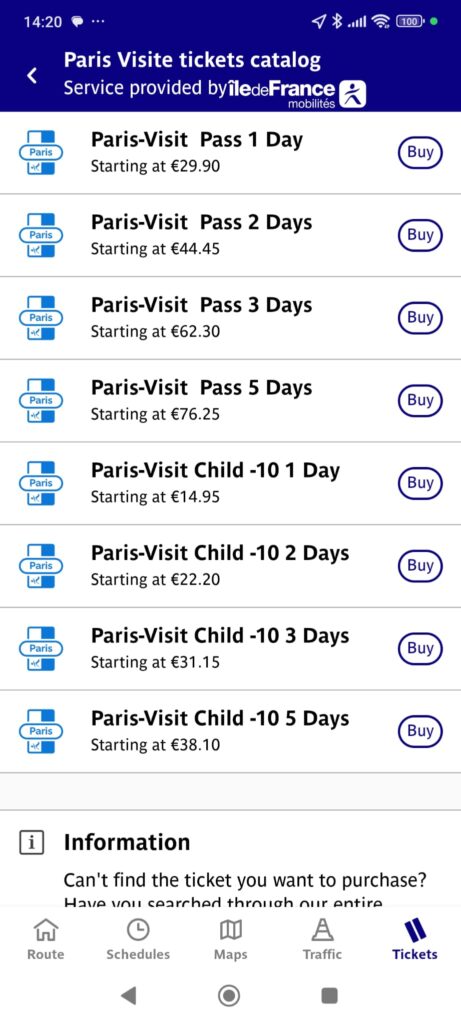
Paris Visite passes list for 2025
Most passes are now available through smartphone apps, including the official Île-de-France Mobilités app and Bonjour RATP. These digital options often provide real-time information, journey planning, and contactless payment.
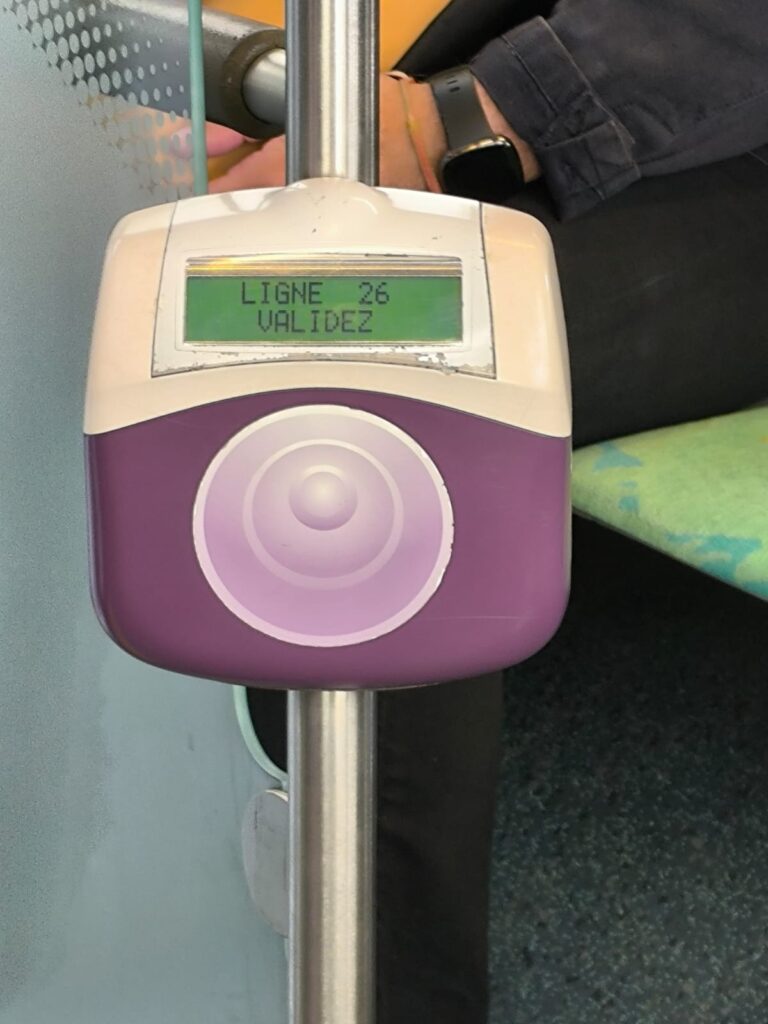
As you get on the bus, you need to validate your ticket or pass by touching your Navigo Easy card or your smartphone against this device. The green light will signal that you’ve paid for your trip.
Money-Saving Tips
Consider your daily travel needs: if taking more than 4-5 Metro journeys per day, a day pass often becomes economical.
Buy your weekly pass in advance, in order to save the 13 Euro fare to get from the airport to the city center. Weekly Navigo passes become available every Friday for the consequent week.
Paris is a walkable city. Use maps, calculate distances and timings, and try to walk instead of using public transport all the time.
If you’re on a cruise stop only, consider picking one of these cruise port of call excursions rather than trying to navigate the public transport system on your own.